
Website pages
EcoBlock™
Clean, easy to handle and store, Beardow Adams’ EcoBlock™ and EcoBlock Mini are a firm customer favourite.
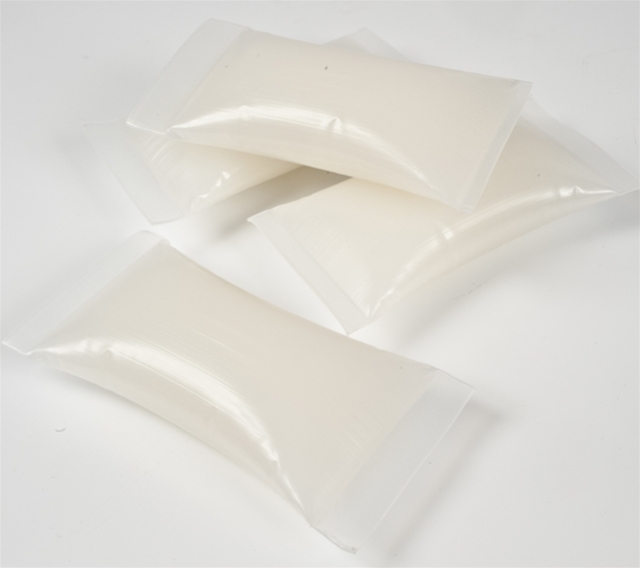
Beardow Adams manufactures adhesives in a number of forms to suit customer requirements and, ultimately, make their production teams’ lives easier.
Our adhesives are available in drums, pastilles, prills as well as EcoBlocks. Here, the adhesive is produced in the shape of a pillow and then sealed in a wrap.
The wrap – made from film – allows the EcoBlocks to be easily handled, used and stored. The greatest benefit of our EcoBlocks is that they can be melted down without the film wrap having to be removed – this saves on waste and time.
Our EcoBlocks come in a variety of standard sizes – up to 1kg – and a smaller mini size – the EcoBlock Mini. Meaning whatever the application, we always have a suitable adhesive for our customers.
Depending on the adhesive used, EcoBlocks come in different colours – clear, white and amber for example. Our blocks are typically manufactured for pressure sensitive and labelling applications.
Since we began manufacturing EcoBlocks many years ago, we have continued to invest, increasing our production capability considerably due to their success. In 2018, we opened a new, fully scaled and automated EcoBlock line in the UK after a €2m investment which gave us an extra 3,000tons capacity per anum. We now have EcoBlock lines in the UK, US and at our newest production site in Frankfurt, Germany.
If you would like to know more, to trial one of our user-friendly EcoBlocks or to switch to this form of adhesive from another, do not hesitate to get in touch today: marketing@beardowadams.com.
Website pages
Diapers & Incontinence Care Adhesives
Beardow Adams has created an innovative, high-performing range of adhesives for the diverse and challenging non-woven and hygiene industry. Our expert knowledge and established global network mean we are ideally placed to serve and supply this important sector which is the largest use for hot-melt adhesives worldwide.

Our BAMCare® range of hot-melt adhesives are practical, sustainable and skin-kind products. They have been developed to offer the optimum level of adhesion to the non-woven, absorbent and backing materials used in the construction of nappies and incontinence care products. In addition to the strength needed to keep substrates securely together to stop leakages and ensure the nappy or pad holds its shape, our adhesives guarantee the product remains a comfortable fit, as they are flexible, allowing for movement.
Our BAMCare 501, BAMCare 502 and BAMCare 503 grades have been designed for the use of permanently bonding non-woven materials together, whilst BAMCare 511 is an adhesive used to bond elastic strands to the material to create elasticated leg cuffs. You can be sure BAMCare 511 will hold the elastic firmly in place, whilst still creating a secure, comfortable, non-leaking product.
The comprehensive BAMCare range offers strong adhesion, high elasticity, good retention of shape, no odour and both a light colour and appearance, whilst avoiding any damage or staining on materials. The adhesives can be applied by a whole range of different methods to suit requirements.
There is a lot of pressure on the global hygiene market with expectations high for growing sectors such as adult incontinence, but it is Beardow Adams’ promise to continue to push boundaries and deliver only the best possible products to customers.
Our nappy and incontinence care adhesives are formulated specifically to provide consistent performance during manufacturing and complete bond security when in end use. For more information on our BAMCare range or to enquire about trialling one of our products, do get in touch: marketing@beardowadams.com.
Website pages
Bio-based Adhesives
Clean, sustainably sourced bio-based raw materials

Beardow Adams is committed to becoming a greener manufacturer of adhesives by continuing to develop sustainable innovations. We have created a range of bio-based and vegan adhesives, and partnered with companies to offer services that drive environmental initiatives. We continue to work with clients to help them produce products that are kinder to the planet.
Bio-based materials play an increasing role in the development of our hot-melt adhesives. Sourcing the latest polymers and resins, combined with our knowledge, research and product development helps us to create the latest in adhesive formulation technologies.
At Beardow Adams, we have a variety of industry proven adhesives with a range of bio-based contents to suit most hot-melt adhesive applications, spanning across multiple markets. So, if you are looking for a greener alternative to the adhesive you use today, look no further than our range of bio-based adhesives for:
- Packaging
- Labelling
- Filters
- Bookbinding and print finishing
- Self-adhesive tapes
- Self-adhesive labels
- Mattress construction and pocket springs
To support you along the way we have created our bio-based indicator dial to help you simply understand the bio-based content of our adhesives ranging from <35%, <55% and ≥55% bio-based content.
Keep a look out for these indicators on our relevant products to help guide you with your choices. You can read more about ‘bio-based’ and what it means on our blog articles here.
If you would like to learn more about our bio-based adhesives for packaging (one of our biggest sectors), please follow the link.
If you would like more information on our bio-based adhesives or green services, do not hesitate to email us today: marketing@beardowadams.com.
News and blog posts
Protect your property from graffiti and pollution with our eco-friendly Naturacoat sacrificial coating
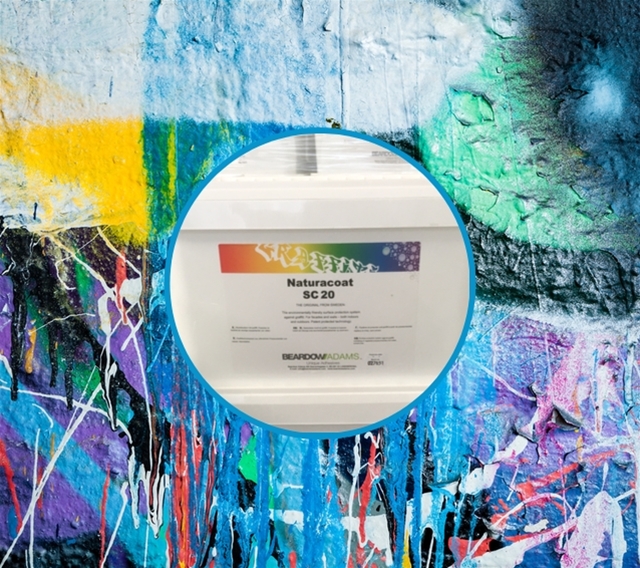
Graffiti is a worldwide problem, but one we have the solution for.
In Milton Keynes – the location of our HQ – 857 incidents of graffiti were reported last year alone. However, in other areas such as Hackney – a London borough in Inner London, their council reported over 29,000 incidents in the same year. Data by Structural Repairs revealed that six-figure sums were spent on removing graffiti by local authorities across the UK in 2019.
Thankfully, there are technologies which exist today such as Beardow Adams’ Naturacoat™ which can protect property such as historical buildings from this form of damage. The issue is that these anti-graffiti products are relatively unknown, and that is where we come in.
The graffiti argument
Graffiti is an interesting topic because its presence can divide opinion. On one hand it can be seen as an expressive form of art and on the other it is regarded as the destruction of property and can be considered an act of criminal damage (UK law). Let us compare both ‘viewpoints’…
Most Brits have heard of ‘Banksy’. Just recently, the ‘graffiti artist’ spray painted several rats in “pandemic-inspired poses” on London Underground’s tubes encouraging people to wear facemasks. Many saw this act as a gesture of support for the NHS, however Transport for London (TfL) had the paint removed in line with its “strict anti-graffiti policy.”
On the other end of the spectrum, a burial area – Ousebank Gardens Grave Yard – was the “victim” of racially aggravated criminal damage when its premises was sprayed with red paint just a few years back. There are also many cases where famous landmarks – such as Melbourne’s Royal Exhibition Building – have been targeted by graffiti.
Graffiti – a brief history
Wikiquote defines graffiti as ‘writing or drawings scribbled, scratched or sprayed illicitly on a wall or other surface in a public place.’
Graffiti is said to have initially surfaced thousands of years ago when the first drawings on walls appeared in caves. Later, the ancient Romans and Greeks wrote their names and protest poems on buildings. Modern graffiti seems to have appeared in Philadelphia in the 1960s and, by the late 60s, it had reached New York.
Today, you are just as likely to see graffiti on an underpass as you are walking into a modern restaurant where it is in fact part of the décor.
The issue with graffiti
Regardless of whether graffiti is seen as a problem or a painting, the bottom line is that the ‘offender’ can be arrested and charged under the Criminal Damage Act of 1971 (UK). Unless it is supposed to be there – i.e. artwork – it can be vandalism of property.
Graffiti can tarnish the reputation of its ‘host’ and affect the ambience of the surrounding area and the psyche of its residents but, to councils, arguably the biggest issue surrounding graffiti is the sheer cost of having it removed. The estimated annual cost to the UK for cleaning up graffiti is over £1bn with the US estimations reaching as high as £12bn. Sadly, some older, more vulnerable structures such as many heritage sites and landmarks can never be fully restored once damaged by graffiti.
Introducing Naturacoat
Proudly manufactured in our Swedish facility (originally Svenska Lim AB), Beardow Adams’ Naturacoat is a sacrificial coating system offering complete protection against graffiti as well as environmental pollution such as smog.
Naturacoat is 100% natural, biodegradable and eco-friendly as it’s made from vegetable polysaccharides and water. The coating is sprayed onto surfaces such as natural stone, brickwork, and ceramics through a dry air system, leaving a thin, virtually see-through film. If the surface is then graffitied upon or polluted, you can simply wash it all away with a high-pressure hot water spray (60-70°C).
Naturacoat is preferred to its wax emulsion rival which can leave a cream colour behind once applied. What’s more, Naturacoat lets the surface underneath breathe and causes no unnecessary long-term damage.
This low expense product which is available in one or two coat formats is perfect for protecting private and public locations as well as historical and high-profile buildings. Naturacoat is already protecting the likes of the Museum of Scotland and Bristol Cathedral.
The best way to tackle graffiti is to give it no surface to cling on to. If you would like to trial Beardow Adams’ Naturacoat to protect your property, get in touch today: marketing@beardowadams.com.
Reusable is the new recyclable: how our alkali washable adhesives assist this process
Beardow Adams has been working diligently with global beverage companies to create a labelling adhesive that would help them cut down on waste, whilst adding to the movements we are already making as a company to be greener.
Although indeed 100% recyclable, a multi-national drinks company were looking to reduce the amount of single-use plastic bottles they manufactured. Beardow Adams presented our client with BAM 2448.
The adhesive washes off PET bottles when soaked in an alkaline solution, allowing bottles to be separated from their labels. This method is considered environmentally friendly because it allows the bottles to be re-used up to 15 times thanks to the adhesive being removed completely during the wash off process. The use of this adhesive saves our customer from releasing 10 to 15 times more plastic PET bottles into the world and its resulting waste.
The drinks company were initially struggling with a dark adhesive that was clinging to the bottles and their labels during the wash off process before they successfully trialled BAM 2448. This new product was developed as an alkaline dispersible hot-melt labelling adhesive for the growing returnable PET industry and its applications. BAM 2448 is suitable for end-of-the-line wrap-around labelling applications and can also aid in the re-using of glass and metal cans. As well as washing off cleanly on cue, the adhesive also copes very well with carbonated drink expansion, which was of course an essential factor for our drinks company customer.
BAM 2448 has been approved by Petcycle which is the pioneer for the circular economy and sustainable recycling of PET bottles for mineral water and soft drinks, and also Returpack, which is responsible for the Swedish deposit systems for metal cans and recyclable PET bottles for ready to drink beverages.
With a million plastic bottles being bought around the world a minute, the recycling and reusability of these goods rank highly amongst the most important requirements of a sustainable economy. It’s no surprise then that eco-friendly drinks manufacturers want to get the most out of their bottles and cut down on highly scrutinised single-use plastics. Some countries are now looking to ban single-use plastics all together. According to our client, it actually takes 60% more energy to manufacture virgin plastic in comparison to recycled PET bottles – damaging for both the environment and the bottom line.
Once a PET bottle has been re-used, it can then be crushed into bales, chipped into flakes and washed in another alkaline solution so it can be turned into a completely new bottle, forming a closed recycling loop system. Beardow Adams is proud that our alkali washable adhesives aid this whole process.
As well as working with clients on greener solutions like the aforementioned and introducing eco-friendlier adhesives to our range such as our popular virtually waste-free hot melts, Beardow Adams actively looks to better our existing products – sourcing higher percentages of bio-based materials for them for example. Our Green Team spearheads initiatives such as these, and you can learn more about them in our recent Green Team article.
For more information on how Beardow Adams can help you with your latest projects and green endeavours, get in touch with your local representative or email sustainability@beardowadams.com today.
—
Download our inforgraphic for a visual representation of the reuse/recycling loop

Improve your green credentials with adhesives for pallet stabilisation
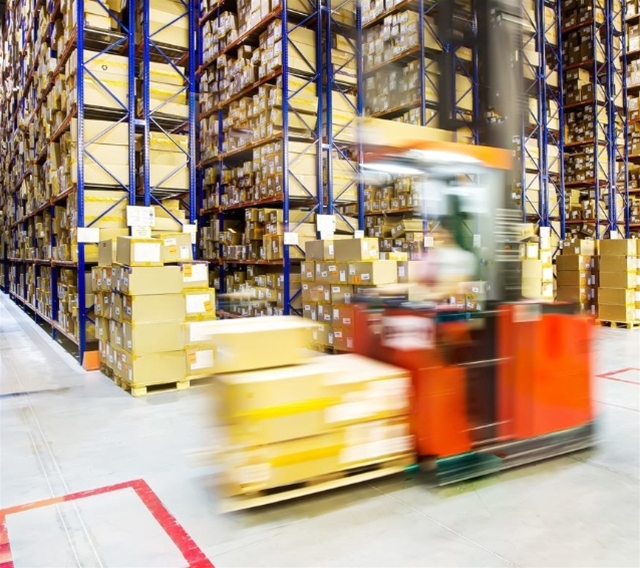
Opting to use high bio-based adhesives and eco-friendly packaging materials in your product manufacturing is one of the best things you can do for the environment today as a business, however you don’t have to stop there…
Adhesives may be an important component in the manufacture of your products, but have you considered using them for eco-friendly transportation purposes?
Using adhesives for pallet stabilisation allows your products to be safely transported without the need for expensive layer pads and an excessive amount of plastic shrink wrap. This practice offers you a great opportunity to reduce material costs and plastic waste.
Pallet stabilisation is quickly edging its way to the front of sustainable packaging. Adhesive is applied as a temporary bonding agent between the stacked layers of goods on your pallet and, upon removal, there is minimal marking to its applied surface.
Pallet stabilisation adhesives provide you with an ecological, cost effective and safe way of transporting your products during transit, whilst also allowing you to use space effectively.
Only a small amount of adhesive is needed to make a big difference when it comes to pallet stabilisation. This simple process allows you to get one step closer to your environmental goals as a business.
Placing as little as 60 grams of adhesive between your pallets results in a stabler load, preventing your products from moving around or toppling over and potentially getting damaged if the vehicle is tipped at an angle or bounces over potholes. Pallet stabilisation can also stop any corner crushing from pallet wrap.
Beardow Adams has a range of hot-melt and water-based adhesives for pallet stabilisation to suit each customer’s application, depending on the bond strength required and materials to be used.
So, whether you need an adhesive with high tack, hard setting, high bio-based or crack off properties, we will have the ideal product for you in our Prodas™ or Pressen™ range for pallet stabilisation.
It’s time to:
– Cut costs
– Reduce your plastic footprint and
– Improve product safety
If you would like to reduce your environmental impact from excess packaging waste, get in touch today to trial one of our innovative pallet stabilisation adhesives or to find out about our other green products and services: sustainability@beardowadams.com.
%20-%20Copy.jpg)
BAMFutura™ 43VE – our new vegan adhesive
Beardow Adams is committed to delivering adhesives and services that drive environmental initiatives and build towards a more sustainable future, without compromising on quality. It’s also important to us that we continually assess all our production sites and internal processes, exploring ways to reduce waste and cut emissions further.
The latest action we’ve taken as a company to minimise our impact upon the environment is to start offering our customers vegan adhesives, in addition to our growing range of bio-based products and eco-friendlier services.
On a planet that’s becoming progressively vegan-aware, change can happen rather quickly. With more and more people taking up veganism, consumers’ buying habits have changed, which has propelled companies into action. Between 2012 and 2016, there was a 185% increase in the number of vegan products launched in the UK. Supermarket shelves are now lined with vegan-approved beauty, household, healthcare and food and drinks products.
In order to meet the standards of customers seeking a product that adheres to the principles of veganism and this latest rise in demand, manufacturers are now having to purchase or produce vegan adhesives so they can package these new products and be able to sell them. These adhesives, however, must be made with adaptions to production scheduling, such as clear-out procedures to minimise cross-contamination. This is where Beardow Adams comes in.
Our new vegan hot-melt grade – BAMFutura™ 43VE – has already proved successful with several large food and drink manufacturers. This product is a V-Label and FDA-approved packaging adhesive that’s ideal for the likes of case and carton sealing, as it’s guaranteed to perform well on plain, coated or corrugated card, in particular.
BAMFutura 43VE is a metallocene-based product that contains no animal-derived substances with exceptional stability and clean-running properties, making it the ideal adhesive to deliver significant commercial benefits to customers: maximised manufacturing efficiencies, an improved end product and a better production environment, for example.
BAMFutura 43VE offers the very same qualities as our BAMFutura 43 adhesive with, of course, the exception that it is vegan. Both grades are water white, low-odour, versatile packaging adhesives, designed to retain bond integrity at both high and low temperatures.
Beardow Adams’ adhesives are manufactured using state-of-the-art machinery in an ISO 9001 and ISO 14001-certfied and BRC-accredited environment. This commitment ensures that we are perfectly placed to develop technically advanced, best-in-class products. Our latest vegan grade is testament to this.
According to Google Trends, the interest in ‘veganism’ increased seven-fold over the last five years. The term now gets four times more interest than vegetarian and gluten free searches. Whether it be for health reasons, to help the planet or protect our furry (and also non-fury) friends, the number of vegans across the globe continues to grow at an impressive rate. As of January this year (2020), website Vegan Bits predicts there are roughly 75.3 million vegans in the world.
The demand for vegan products is undoubtedly here to stay and today there are progressively more varieties of synthetic ingredients and chemical processes available to create adhesives for all purposes, which is why we believe more and more adhesives will switch to vegan formulas. We at Beardow Adams vow to keep you up to date along the way.
To find out more about BAMFutura 43VE or our other ‘green’ products and services, email marketing@beardowadams.com today.
“Katy was a fantastic person to work with. She is very conscientious and meticulous in her work, and always went over and above to help others.”
Moira Ratcliffe, Digital Marketing Manager at Reed

 My work portfolio