Articles

ARTICLE
Laugh away your stress
Aspiring Accountants article
Unless you’re a chocolate consultant, it’s likely at times (or a lot of the time) you’ll find yourself stressed at work. Some of us are more susceptible to stress than others, but the amount of stress we put ourselves under can largely be dependent on the type of role we’re in. Enlisted military personnel, firefighters and airline pilots are said to have the most stressful jobs in 2018 whilst diagnostic medical sonographers, hair stylists and audiologists are believed to have the least. But what about those of us in humble office jobs with just our computers for company? What do our stess-o-meters show?
Working 9 ‘til 5 (ish)
Even if we’re not facing the great pressures of being employed in front-line service roles (such as those in some healthcare positions), working in an office environment can also be very stressful – so much so that it can affect our ability to work effectively. A certain level of stress is natural, even healthy, in a professional environment, but it’s important that it doesn’t get out of hand; high levels of stress can result in anxiety and burnout, which can lead to more serious mental health issues.
Regardless of occupation, we should all be aiming to make our working (and of course home) lives as ‘zen’ as possible for our own personal wellbeing. There isn’t an overarching definition of wellbeing, but there is a general agreement that at a minimum it includes the presence of positive emotions and the absence of negative ones. So, how do we achieve this positivity in the workplace, and is there an antidote for office stress that doesn’t involve throwing in the towel?
Apparently so, and it’s called laughter…
Life’s better when you’re laughing
ITV reports that a number of staff at an accountants in Cornwall have been “sniggering away their stresses” with laughter yoga. Quite the contrast to the typically quiet, serene setting of the ancient Indian practice, laughter yoga is loud and full of those oh-so satisfying belly laughs. The Downward Dog isn’t a feature of these classes; instead, yogis (cool name, right?) get to let loose with exercises that include throwing pretend milkshakes and doing the Hokey Cokey.
The Cornwall Laughter Club says that laughter is great exercise for the diaphragm, facial and abdominal muscles, refreshes oxygen which aids blood flow, improves our connection with others, improves mood and creativity, boosts our immune system and is a natural painkiller. Where do we sign up?
One theory behind laughter yoga
Because laughter boosts morale and wellbeing, it is thought that if you combine the act with yoga it will not only help staff with their physical and mental health but to cope with the challenges they face in the office.
Laughter reduces stress hormones and increases the release of endorphins – the natural, feel-good chemicals. The activity can help staff get motivated and enlivened for the working week as well as ‘deal’ with or approach particularly difficult workplace challenges with a better head on their shoulders. Yoga instructor Emma Graham says that staff could approach particularly difficult clients with laughter (although, not laughing AT them, obviously).
Laughter yoga is really taking off and not just in Cornwall. It’s a great form of escapism, and you can find laughter yoga classes up and down the country. It was developed by a medical doctor from India – Dr Madan Kataria in 1995 – and has spread across 100 countries.
See a yoga laughter class in action.
Want to work as a stress-free accountant? Why not suggest laughter yoga to your boss? Own your own business? Perhaps it’s time to further invest in your staff. Looking to start or develop your career in accounting? Get in touch with Aspiring Accountants for more information on suitable courses.

ARTICLE
Can women have it all?
UKCBC News article – accounting
We recently attended the annual Accountex event at the ExCel centre in London; Accountex is the UK’s number one exhibition and conference dedicated to accounting and finance professionals. The two-day event gives attendees the opportunity to hear from a great variety of industry experts in seminars, get involved in hot accounting topics on round tables, and visit the stands of over 200 exhibitors that are offering the latest accountancy products and services.
UKCBC listened to a number of seminars and joined a number of round table discussions with the aim of gaining insights on the accounting and finance industry that could benefit our former, current and prospective students. The first seminar UKCBC attended was a panel session titled ‘Can Women Have it All?’ The seminar was facilitated by Catherine Morgan, FCA, and the panellists were Kath Haines, Chief Executive of CABA (the charity that supports the wellbeing of the chartered accountancy community); Isabelle Campbell, a consultant, trainer and coach; and Laura Dymott, a forensic accounting and investigations team manager.
The panel discussed their own accounting journeys with the audience and addressed the big challenges facing women in finance: are women able to have it all, and what does ‘having it all’ actually mean?
A Man’s World
“Travel by yourself and you’ll go faster, but travel with your team and you’ll go further.” – Kath Haines
First to share their story was Kath Haines; the chief executive has been at CABA for ten years and was the most experienced panellist. Haines told the audience that, although “it was very much a man’s world” when she first started her accounting career, her successes derived from simply being herself; she refused to take on the typical ‘pin-striped suit,’ serious accountant persona.
Haines explained to the onlookers that she got to where she is today by treating people the right way; she said that being a leader is all about understanding the issues people are facing and recognising when they want something different.
Haines’ biggest challenge came when she was made redundant from a senior manager role just five months after returning from maternity leave. She was the only person in that particular job, but just three months after the redundancy, the same position was given to a male colleague. Although Haines has been made redundant “three to four” times in her career, she encouraged the audience to take the positives away from a situation: by the time her former male co-worker had been given the job, she was already in a new role and on a new journey…
“We can have it all…
…depending on what our interpretation of ‘having it all’ is.” – Isabelle Campbell
Next to take the limelight was consultant, trainer and coach, Isabelle Campbell. The consultant shared some of the challenges she’s faced as a prosperous finance professional, which included the relationships she has with her friends and her wellbeing suffering due to not having enough free time outside of work commitments. Campbell said she hasn’t personally suffered from ‘burn out,’ but it took her taking maternity leave to realise a change was needed in her life.
Today, the coach makes time for herself (usually by allowing herself to say “no” to things) and recommends that all working professionals should do the same; Campbell enjoys eating well and meditating in her free time, for example, which allows her to relax and de-stress; this helps her “sleep better at night and wake up happier in the morning.”
Campbell explained to the audience that, although she hasn’t witnessed a gender bias in the sector, she has suffered from ‘imposter syndrome’ (the feeling of inadequacy that persists despite evident success) throughout her career. Campbell said that if she had had a female role model to look up to this would have helped her, or possibly stopped her, from having feelings of self-doubt. The coach says she still has that “little gremlin on her shoulder” today, but rather than listen to it, she writes down what it says and then evaluates whether it’s worth listening to (usually it isn’t). Campbell told the audience that pushing yourself outside of your comfort zone – such as volunteering for tasks at work – can help you to fight off imposter syndrome.
The consultant’s definition of ‘having it all’ was a combination of being able to look after her own wellbeing, being able to ask for help when needed (and also accepting it) and being able to speak up, have a voice and elevate the professional conversation. However, Campbell also relayed that “ we all have our own versions of ‘having it all;’” for one individual this could be having a senior role with a good salary, but for another this may mean being able to have a family as well as a rewarding career.
“Opportunities won’t present themselves…
…you have to go out and get them for yourself.” – Laura Dymott
The final member of the panel to have her say was forensic accounting and investigations team manager Laura Dymott. Like Campbell, Dymott hasn’t personally had direct exposure of gender inequality in the work place, yet believes it is still an issue today that “won’t be solved overnight.” Her answer to ‘can women have it all?’ was “yes, but only if you want it.”
Dymott believes the responsibility lies with us as individuals to be successful. The team manager explained that opportunities won’t necessarily present themselves to females in the workplace, therefore women need to voice their interest for existing opportunities (which she admits can be difficult if there are no role models and you’re the first to do so) and create new ones themselves. Dymott said that, personally, she “volunteers for everything,” and juggles lots of career-boosting responsibilities (such as being on the ICAEW (Institute of Chartered Accountants in England and Wales) panel) outside of work but acknowledges she doesn’t yet have children so it’s easier for her to do so. Her advice to the audience was that “the pressure of a job has to be a healthy one” – she’s a busy
woman and always wants to do more, but that’s what she enjoys doing.
Panel facilitator Catherine Morgan finished off the seminar with some valuable advice for the audience:
“I want my boys to see me working. It’s important for us to ‘stand at the table’ and say we have a right to be there; not because we’re women, because we’re people.”
We hope you’ve enjoyed the low-down on our first takeaway from the Accountex 2018 event. Keep your eyes peeled for our next two articles on ‘How the Role of an Accountant is Changing’ and ‘Millennials – The Next Generation of Accounting’.
Accountex will be back next year on the 1st and 2nd of May 2019.
To keep up to date with the latest industry events, subscribe to UKCBC’s AAT newsletter; we’ll also keep you updated with the latest news and views in the accounting sector.
Interested in studying accounting at UKCBC? Visit us on one of our next AAT open days in August – you can register your attendance here.

ARTICLE
When tourism goes too far
UKCBC News article – travel and tourism
There’s no question that the tourism industry has grown rapidly over the years; international tourist arrivals have increased from just 25 million in 1950 to 1.24 billion in 2016, data from the United Nations World Tourism Organization (UNWTO) revealed.
When looking at the travel statistics by world region (Asia and Pacific, Middle East, Americas, Europe and Africa) in relative terms, online publication Our World in Data described Europe as the “most important tourist region;” this is because two-thirds of all international tourists arrived in Europe in 1950. This number may have dropped to 50% by 2016, but this is still a significant number.
In 2017, international tourist arrivals grew 7% – from 1.24bn up to 1.3bn – and are expected to grow by another 4-5% in 2018. Looking at these numbers, you could say the substantial increase in tourist arrivals over the last 60 or so years is a good thing. After all, tourism has a whole host of benefits for both the tourist and the host nation; tourism gives people the chance to experience new cultures, and it provides locals with an opportunity for economic and educational growth. However, whilst the benefits of tourism are substantial, is there any danger of it going too far?
Loved to death
There have been many instances where a location has been negatively impacted due to tourism. We discussed India and the Taj Mahal’s tourism troubles not so long ago but, most recently in Europe, hundreds of Ibiza locals have taken to the streets to protest against the impact of overtourism. The Balearic Island is known as one of the best party locations in the world and draws in millions of tourists each year, of whom Brits make up the majority. However, it seems fame isn’t free; it has come at a cost to the locals in the form of privatised beaches, increased crime, boat parties, noise pollution and a surge in rental prices. Residents want the traditional, peaceful Ibiza back and blame “mass tourism” for the degradation of the environment and the rise in anti-social behaviour, the Telegraph reports. The director of local pressure group Prou! (who organised the protest), Àngels Escandell, said: “We don’t reject tourism [sic] but we do reject tourism which is unlimited, disrespectful and excessive.”
What is overtourism?
The term overtourism hasn’t been around for very long, but The Telegraph recently described it as “the phenomenon of a popular destination or sight becoming overrun with tourists in an unsustainable way.” It’s the opposite of responsible tourism, in which tourism is used to improve locations and make them better places to live in and visit.
Some of the world’s most beautiful, iconic locations are creaking under the weight of tourists, and it’s putting a strain on communities that are struggling to cope with the demand. In Scotland, some of the Isle of Skye’s most picturesque locations are suffering from increases in road and path erosion; in Iceland, the popular hiking trail to Reykjadalur was closed as it was deemed too damaged by overtourism to be open to further traffic; in Croatia, “crowds and cruise ships have ruined [the city of] Dubrovnik;” in Italy, tourism has been blamed for increased pollution in Venice; in Mexico, significant amounts of coral reef surrounding the island of Cozumel has been destroyed by boats and scuba divers… The list of destinations affected by overtourism is seemingly endless, but is there a way to keep a cap on tourism in some of the world’s most famous destinations?
Sustainable development of tourism
TTG Media reports that “despite the alarming headlines, tourism can be an immense force for good, but governments, tourists and travel agents all need to do their bit to ensure this is the case.” Governments and travel agents can put measures in place to limit visitors to a location, and tourists can opt to explore less densely visited areas, for example. In fact, there have been many instances where such measures to curb the negative impacts of tourism have been put in place.
In the case of Ibiza, accommodation platforms such as Airbnb have been banned from listing rooms in private houses and apartments in Ibiza Town to encourage visitors to use hotels. In one of the most popular party locations – San Antonio – an acoustic protection zone has been introduced which means clubs will have to close at 3 a.m. rather than 5. What’s more, a ‘Love Ibiza’ campaign has been launched by the tourist board to promote sustainable travel.
TTG Media reports that governments are worried money could be lost and tourists may feel unwelcome if they take measures to reduce tourism, but successful examples show this is not the case. Take a city like Venice. Measures such as a ‘locals first policy’ for water buses, restrictions on large cruise ships entering the city centre, and bans on new tourist accommodation and fast food outlets being set up are currently in place, yet tourist numbers have not declined. Meanwhile, Rwanda has hiked up their fees for gorilla-watching permits to protect their assets, and popular destinations in Thailand and the Philippians have decided to ban tourists completely for a set period of time: Maya Bay (featured in Leonardo Dicaprio film The Beach) and Boracay Island, respectively.
Is travel and tourism a subject you’re passionate about? Have you considered an HND in Travel and Tourism Management? The qualification could put you on the path to a rewarding career in the sector and contains a module on sustainable tourism development. Contact a UKCBC course advisor today for more information.

ARTICLE
Can participating in regular exercise benefit future generations?
HND Insider article – healthcare
For years we’ve known about the benefits of physical and mental exercise on our bodies and minds; exercise helps to increase muscle strength (keeping our hearts healthy), and improves brain function and memory, for example. However, scientists have now found that regular physical exercise could also boost the learning ability of our future children, giving them a head start in life.
A recent German study on male mice revealed that fathers who had lots of exercise went on to have offspring who performed better on tests that evaluated learning ability and had brains which formed many more neuron connections (known as synapses) than the control group who were not subject to such a stimulating environment. Scientists discovered that higher levels of the molecule ‘microRNA’ – known to promote this neuron activity – were built up in the brains (specifically the hippocampus (the area of the brain that is important for learning)) and sperm of fitter fathers in response to exercise, and therefore more of these molecules were passed onto their young, despite not altering their DNA. The BBC states that further research is required to see if these findings are translatable to humans.
Epigenetic inheritance
Often referred to as an unconventional finding, epigenetic inheritance argues that inheritance doesn’t just happen through the DNA code that humans pass onto their children; it is widely thought that epigenetic marks (known as chemical tags) are erased between each generation in cells called primordial gene cells (PGC). The idea that a child can inherit altered traits through these tags from their parents’ past experiences is a possible one with epigenetic inheritance – in the instance of the mice, this is certainly the case. Dr Jon Houseley, principal investigator in epigenetics at the Babraham Institute, said: “such inheritance mechanisms in mice suggests ways in which environmental information may be passed to our own children.”
The effects of physical exercise on the brain
We’ve known about the benefits of physical exercise on the body for quite some time, but evidence keeps mounting that the activity is also good for the brain. Being physically active affects the brain on multiple fronts. News site Time reports that whilst aerobic exercise (exercise that gets your heart pumping) appears to improve an individual’s cognitive function (cerebral activities that lead to knowledge), “resistance training (also known as weight training) can enhance a person’s executive function (a set of mental skills that help you get things done) and memory.”
Exercise helps the body release a number of hormones which participate in aiding and providing a nourishing environment for the growth of brain cells.
The media division of Harvard Medical School Harvard Health Publishing reports that regular physical exercise (especially aerobic) boosts the size of the hippocampus. In addition, there is now evidence to suggest that exercise can improve brain health through neuroplasticity – this is where brain cells can more easily respond to injury or disease.
The benefits of exercise come from its ability to improve concentration and mood, boost memory, improve mental health, reduce stress and anxiety, enhance creativity and improve sleep. Any issues in these areas often cause or contribute to cognitive impairment, reports The Guardian.
The effects of physical exercise on the body
Both short-term and long-term exercise affect the body’s systems in a number of positive ways. Looking at your musculoskeletal system, physical activity increases strength, coordination and balance. With your cardiovascular and immune systems, exercise strengthens your heart, lowering your risk of heart disease, and boosts lymph flow which promotes a healthy immune system. In addition, exercise improves mood, helps to control weight, boosts energy and promotes better sleep.
Whilst we wait to hear whether exercise can boost the learning ability of our future offspring, there’s no doubt that the activity has many health benefits on our own bodies, both physically and mentally. I don’t know about you, but I’m already running around the house looking for my trainers.
Interested in learning more about the human body? Perhaps an HND in Health and Social Care could put you on the path to a successful and rewarding career in the healthcare sector. Email HND Insider today for more information.
Want to hear more news and views relating to the health and social care industry? Subscribe to HND Insider’s newsletter.
UKCBC marketing collateral examples
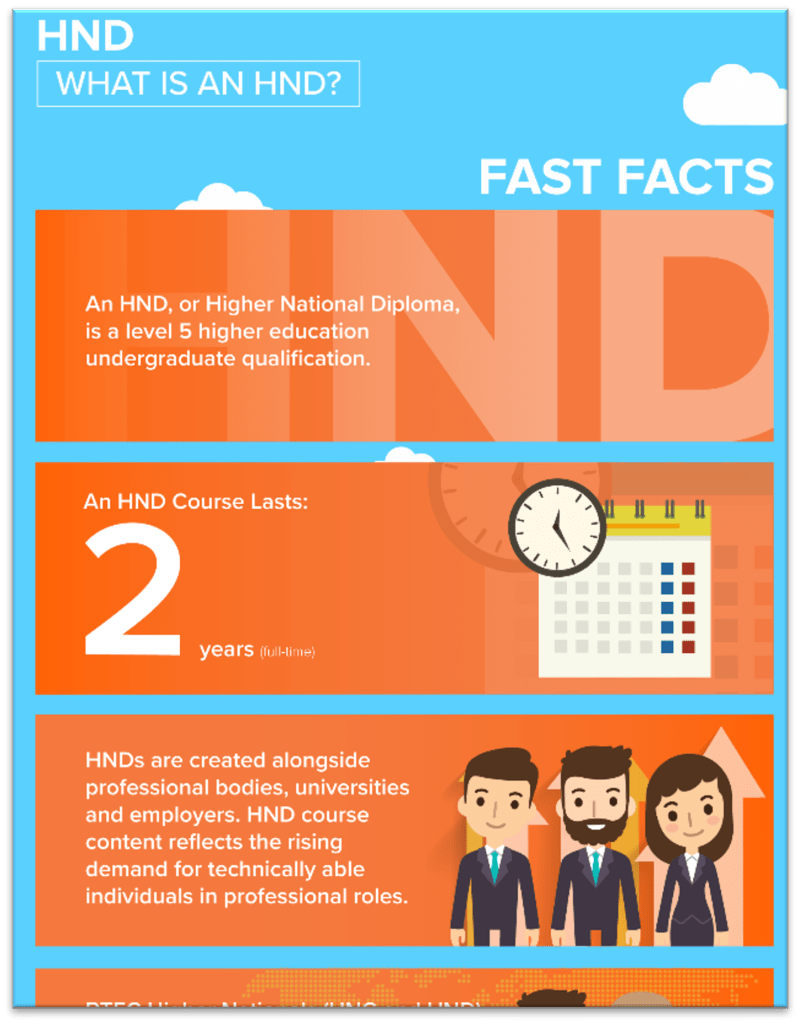
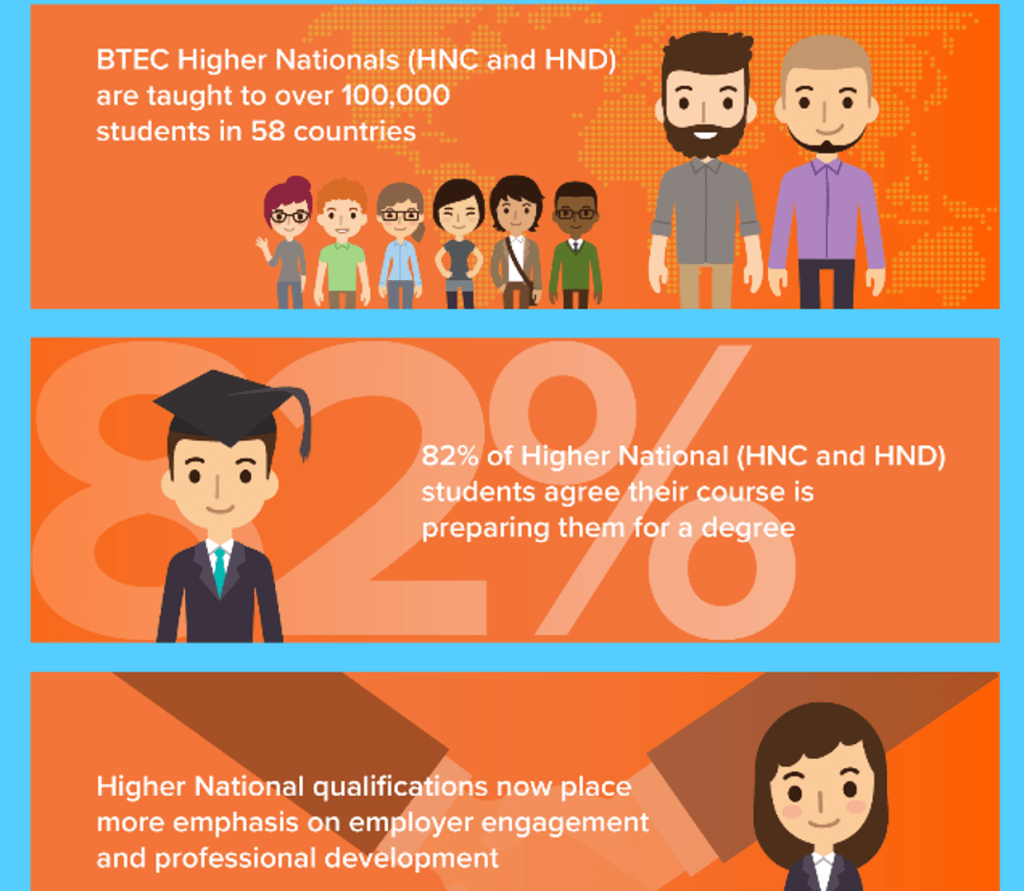
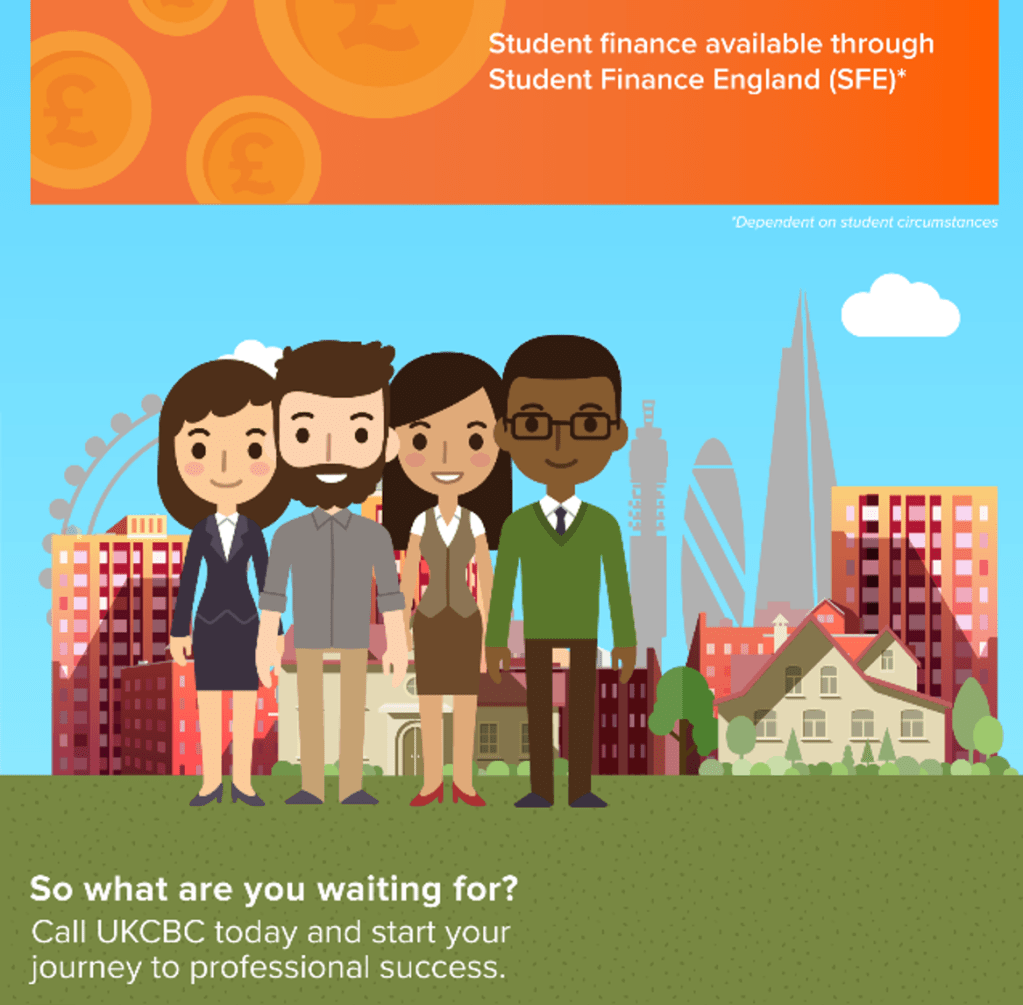
Infographics for students
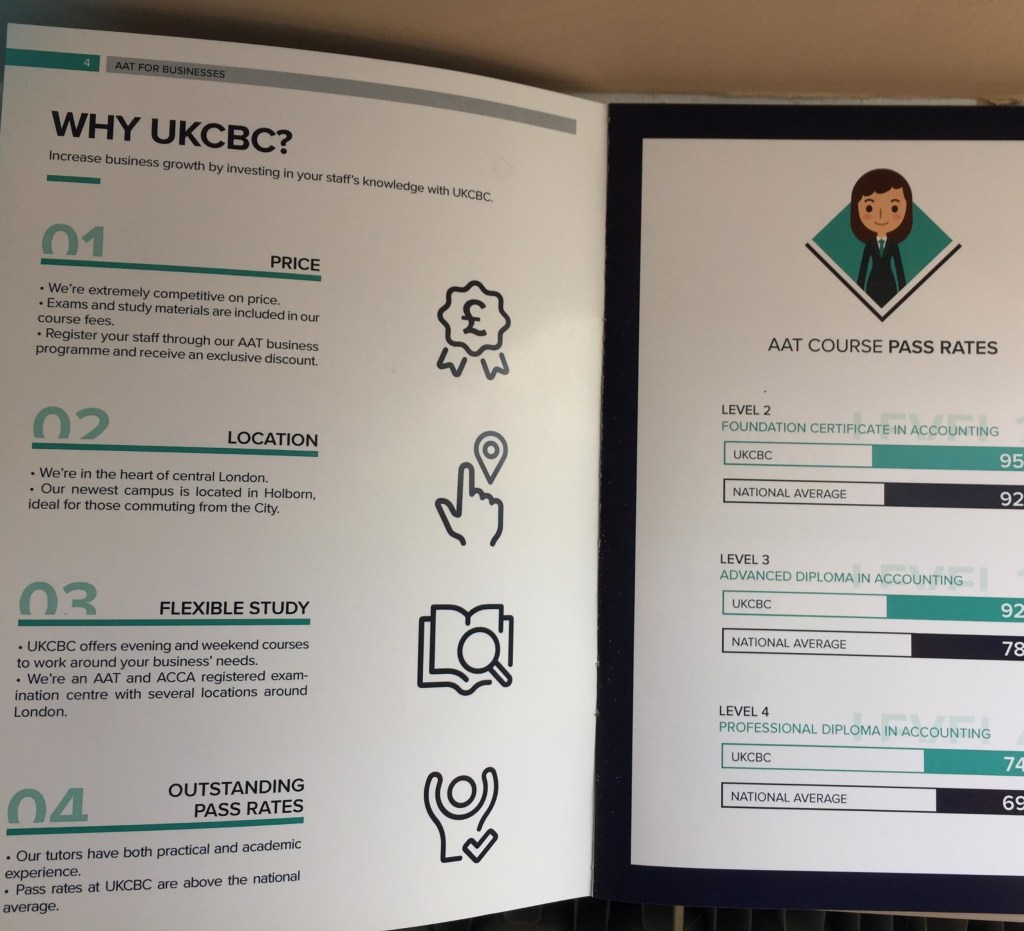
I created the content for, and helped to design a series of infographics for the college. The infographics provide visual information regarding the courses UKCBC offer, the benefits of studying with the college and much more.

Posters and brochures
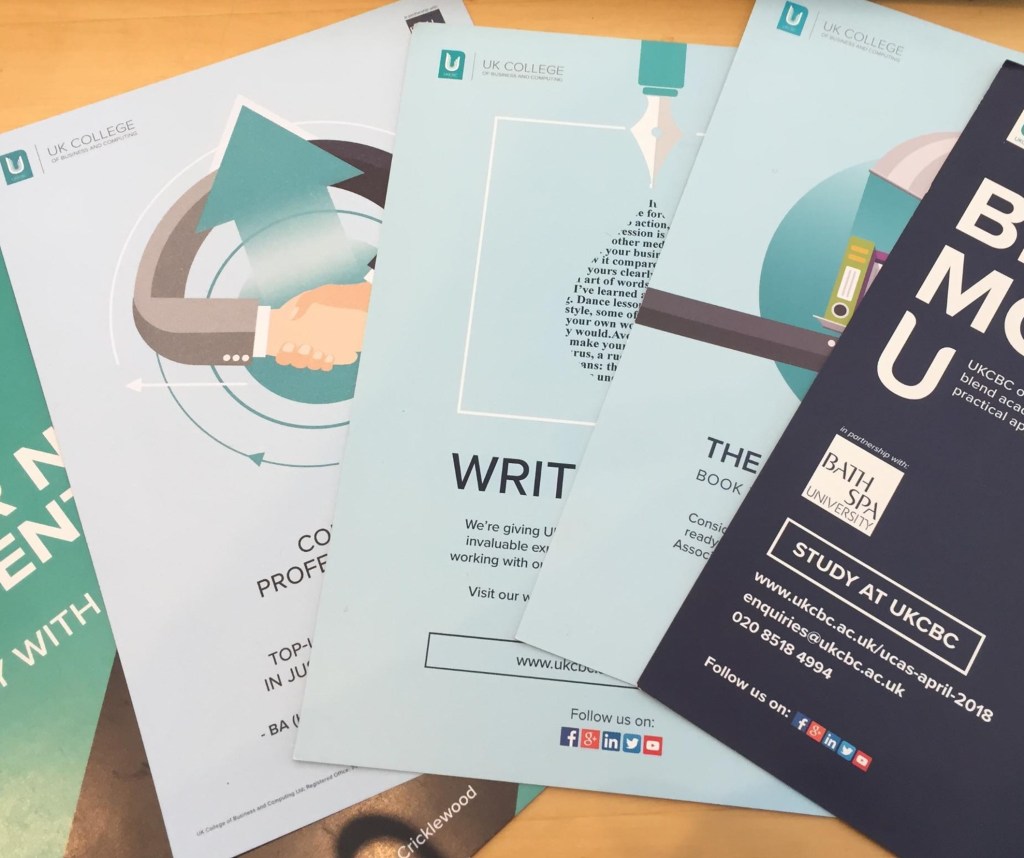
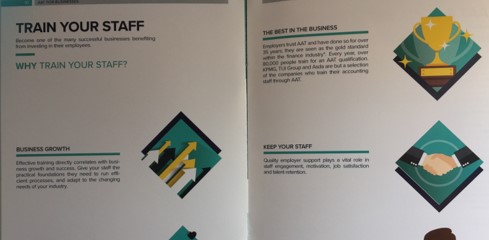
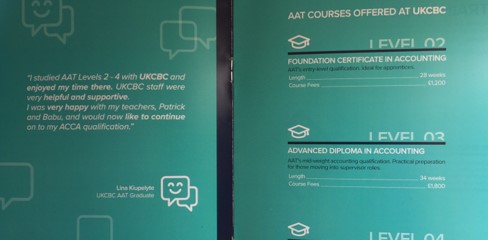
Just a few examples of some marketing collateral I wrote and helped design.

Recommendation
“Katy’s a dedicated and driven professional, with a talent for producing engaging written content that adds value to any role they are in. It was a joy to work with Katy and wish them well for their future endeavours.”
Eric Coveney, Head of Marketing at Beardow Adams
 My work portfolio