ARTICLES/NEWS
The importance of supporting mental health in the workplace
Topic: employee wellbeing
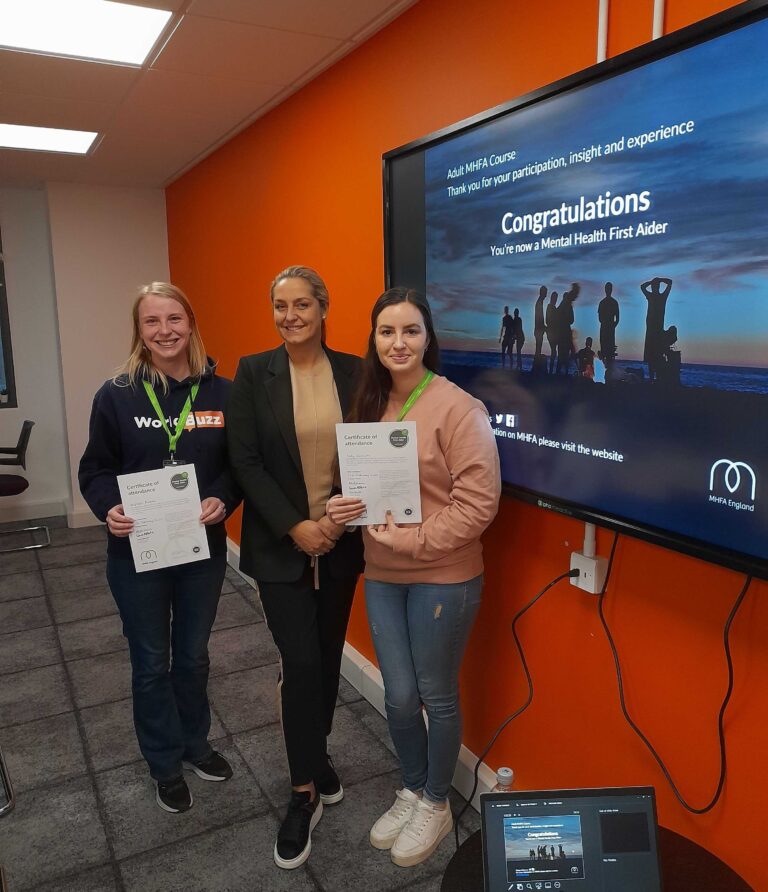
In January, we were kindly asked by BizSpace – the UK’s leading provider of regional flexible workspace (where our HQ is located) – if we wanted to invite two members of staff to go on a mental health first aid course to help with supporting those struggling with mental health in the workplace. As a company whose primary objective is to improve the working lives of millions of people, in which mental health plays a huge part, we, of course, jumped at the opportunity.
Our Content and Community Manager, Katy Jackson, and our newly appointed Customer Success Manager, Natalie Bunker, were delighted to attend the two-day Mental Health First Aid England course run by Ann Marie Robinson of BMR Health and Wellbeing, and have taken away some huge learnings that we’d like to share with you today.
Why a Mental Health First Aid (MHFA) programme?
The MHFA programme was created in Canberra, Australia, in 2000 by Betty Kitchener (an educator and mental health consumer) in partnership with her husband Professor Anthony Jorm (a mental health researcher).
The aim of the programme was to extend the concept of first aid training to include mental health issues so that community members were empowered to provide better initial support to people developing mental health issues or in mental health crisis. It has since evolved into a global movement with the programme now being adopted and delivered in 24 countries. To date, over four million people worldwide have been trained.
MHFA courses are a suite of evidence-based, accredited training programmes that empower and equip individuals with the knowledge, skills and confidence needed to support a friend, family member or co-worker experiencing a mental health problem or experiencing a crisis such as being suicidal.
The two-day Mental Health First Aid England course taken by our ‘WorkBuzzers’ covered topics such as mental health (influences i.e., stress, stigma and discrimination, and recovery), depression, suicide, substance misuse, anxiety disorders, self-harm, eating disorders, personality disorders, and psychosis.
Those who complete the course are taught an action plan on how to help a person in a mental health crisis or developing mental health issues using the mnemonic ‘ALGEE’ (just like those in a first aid course are taught ‘DRABC’):
A – approach the person, assess, and assist with any crisis
L – listen and communicate non-judgementally
G – give support and information
E – encourage the person to get appropriate professional help
E – encourage other supports
Of the course, Natalie Bunker, WorkBuzz’s new Customer Support Manager, said:
“Mental health and wellbeing are such important topics, especially now. Having completed the course, I’ve gained confidence in my ability to help those who are struggling and fight the stigma surrounding mental ill health. It’s okay to not be okay.”
The importance of supporting mental health in the workplace
Mental illness is a growing global crisis. The World Health Organization (WHO) and the Global Burden of Disease study estimate that almost 800,000 people die from suicide every year. That’s one person every 40 seconds.
Mental health includes our emotional, psychological, and social wellbeing. It affects how we think, feel, and act. It also helps determine how we handle stress, relate to others, and make choices. Mental health, along with physical health and social wellbeing is an essential component of overall health.
Over the last two years in particular, the mental health of workers has been impacted by the Covid-19 pandemic, leaving many with feelings of burnout from working excess hours or isolation due to having to work at home alone.
Although mental health is now much more openly talked about and supporting mental health in the workplace is largely seen as a necessity for many jobseekers, there are still countless employers who haven’t yet put the issue front of mind.
Work-related risk factors such as inadequate health and safety policies, poor communication and management practices, low levels of support for employees, performance pressure, and job insecurity can all negatively affect mental health.
Employers who aren’t ‘on top’ of mental health are more likely to have employees with poor mental health and the consequences can be:
- Lack of engagement
- Lower productivity and job performance
- Feelings of depletion
- Reduced communication
- Poor decision making
Ann Marie Robinson of BMR Health and Wellbeing said:
“Rapid and near constant change in workplaces is placing unprecedented pressure on employee’s coping resources and, in addition to the pandemic, has affected wellbeing even further. It is vital as employers and employees that we understand employee wellbeing and what contributing factors impact our teams both positively and negatively at work so that we can openly discuss them and implement positive change. There is no health without good mental health. Every business needs a two-way approach.”
About BMR
BMR supports organisations to implement Psychological Health and Safety frameworks aligned to the new global standard ISO45003. This is focused on creating Psychologically Healthy and Safe workplaces within an Occupational Health and Safety Management system. Taking a preventative and risk-based approach ensures that you meet your legal obligations as an employer. You will be able to identify and reduce the sources of work-related stress so that your employees can flourish in a positive work environment.
Ways to promote that you support mental health in the workplace
The most vital action an employer can take is to offer resources for both broader mental health and those who need clinical services. Making clinical services accessible is critical for employees experiencing mental illness. However, most workers do not need clinical care, they need mental health support.
Strategies employers can use to promote mental wellbeing at work include:
- Employee assistance programmes (EAPs)
- Relaxation spaces
- Mental health self-assessment tools
- Free or subsidised clinical screenings for depression
- Free or subsidised mental wellbeing coaches or mental health first aid courses
A range of studies, including randomised controlled trials, have shown that mental health first aid training improves knowledge, reduces stigmatising attitudes, and increases first aid actions towards people with mental health issues. - Health insurance with mental health benefits at no or low out-of-pocket costs
If you are looking for the means to find out how happy your people are at work and to get a sense of their overall mental wellbeing, get in touch today to see how our employee surveys can help. Email: hello@workbuzz.com or speak to one of our experts by booking a demo of our employee experience platform.

ARTICLES/NEWS
5 tips for building your culture in a hybrid workforce
Topic: hybrid working/company culture
With many organisations seeing the employee benefits of working from home during the Covid-19 lockdowns, they have now opted to continue with this new way of working, but it is not without its challenges. While technology proved to be one of the biggest struggles for companies during the start of the pandemic, the concern has now shifted to company culture and how you are supposed to maintain it well with a hybrid workforce.
Your culture shouldn’t disappear when your employees are working from home, but it’s not unfair to say that it can be harder to maintain. When employees are together in an office, it’s easier to keep them connected with each other and engaged in their work. And you don’t have to organise a Zoom or Teams call to have a face-to-face conversation or to simply say hello and check in with one another. However, with flexible working becoming the norm for many, organisations now need to find new ways of creating a culture where all employees feel included, happy in their roles, and energised to do their best work.
For companies who offer their employees a great working culture are likely to reap benefits such as:
- Reduced employee turnover
- More brand advocates
- Increased revenue
- Reduced sickness/fatigue, and
- Engaged, happier and higher-performing employees(!)
Your workplace culture affects how both current and future employees see your company and its leaders. It also affects how efficiently your employees work and how satisfied they are with their jobs, which links directly with the success of your organisation.
With the above in mind, here are five tips to help you improve or build a great company culture with a hybrid workforce:
1) Treat your employees/show your appreciation
The power of employee recognition is huge. Every employee wants to feel appreciated and valued. Recognising, rewarding, treating or thanking employees for the impressive work they have done is a great way of achieving this. And the good news is that there are many employee recognition incentives you can implement right away. But it’s worth baring in mind that you don’t always have to wait for something great to happen… Sometimes just treating your employees because you feel like it can be even more meaningful. Who’s going to say no to a Krispy Kreme (or two) on a Friday?
2) Increase lines of communication and increase team collaboration
With many employees working from home, communication can become even more challenging. Companies with remote (or partially remote) workforces firstly need to ensure that they have technology in place which allows for effective communication and collaboration (ideally from anywhere in the world). When this is in place, the frequency of communication can then be increased to help reduce the chances of homeworkers feeling alone or isolated. This can be through the likes of more regular company updates, check ins, and you can also increase the opportunities for team members to collaborate. If it is logical, you can invite more than one person to work on a project for example. One thing to bear in mind here is that no one really likes to be micro-managed so, depending on your company, you may also want to think about embracing and inspiring employee autonomy.
3) Organise more frequent socials – have more fun!
If your team are spending more time away from each other, it’s a good idea to increase the social activities you put on as a company. They can be organised in different locations if you have a global employee base (you don’t all need to be in one place). No job should be all work, no play. But if you have a work hard, play hard culture, employees will work hard because it’s worth it for how they are treated. It’s important to incorporate fun activities into your employees’ schedules as this breaks up the work, encourages them to build connections, and will help foster a great company culture. Your options here are almost endless, but team activities like a Zumba class, crazy golf, quizzes, and meals or team days out tend to go down a treat.
4) Create culture goals and reiterate your values
New employees who you onboard shouldn’t be the only ones who find out what your goals and values are as an organisation. If your existing employees can’t tell you when asked, you haven’t made enough effort to make them evident or clear. Your culture grows as you grow, and with each new team member you bring in. There is no final state to aim for because of this, so you need to have goals and a vision for the kind of culture you want to create as well as a roadmap for how you intend to get there. This will act as a guide that you can refer back to and align yourself with if you feel like you’re veering off the path. Is your aim to build a culture where your employees maintain a healthy work-life balance while celebrating each other’s achievements in and outside of work? Let it be known. You can be creative with this; having your culture written down in your company handbook just isn’t enough anymore. It needs to be spelled out and, more importantly, it needs to be felt!
5) Do regular check-ups with a focus on health and wellbeing
It goes without saying now that employers should be checking up on employees and promoting health and wellness. Allowing employees to work from home can contribute to this but there is so much more employers can be doing to ensure their people feel listened to and looked after. Setting up regular one to ones with line managers and their team can help you keep on top of this, as well as training some of your employees to be mental health first aiders. There are also many resources and tools available today (both free and paid for) such as apps like Headspace which can help employees manage stress levels or deal with personal issues that may impact their job performance and life outside of work.
There are, of course, many more ways of improving your company culture such as bringing in employees who are the right cultural fit and understanding more about cultural differences, but the five elaborated on above will give you a good starting point, especially with employees working remotely.
One of the most efficient ways of gauging whether your employees are satisfied with your company culture is to conduct employee engagement surveys. This is ideal for companies who do not have the time nor resources to ask each employee individually in person.
Employee surveys allow you to gather real-time insights from your people and improve the employee experience, therefore helping you to build a more inclusive culture. Get in touch today for more information on the WorkBuzz platform: hello@workbuzz.com, or simply request a demo to see it in action for yourself.

ARTICLES/NEWS
The importance of EDIB in the workplace
Topic: diversity and inclusion
DEI, DIB, D&I, JEDI, EDIB… chances are if you work in the HR or ‘people’ space, you are likely to have come across most – if not all – of these acronyms in your working life (or in the news in recent months!), and you will likely have a preference for one of them at your organisation.
At WorkBuzz, we use the term ‘EDIB’ because it encompasses all the areas that need to be thought about and continually worked on if a company is to have a successful working culture that is maintained as it grows and changes.
EDIB stands for equality, diversity, inclusion, and belonging:
- Equality – fairness, equal rights, and opportunities for all
- Diversity – recognising and celebrating differences seen across people
- Inclusion – people feeling welcome and valued
- Belonging – a culture where people feel able to be their true selves at work
While it is true that many businesses have plans in place in a bid to improve D&I in their workplace or are spending copious amounts on D&I training, they are still missing the mark because they are forgetting the need for employees to feel a sense of belonging.
What is the importance of EDIB in the workplace?
Simply put, organisations who prioritise equality, diversity, inclusion, and belonging can expect to find happier, more engaged and committed employees which often results in improved employee retention, lower sickness levels, and higher revenues.
The expectations of employees and jobseekers today are far higher than they were just a few short years ago. With the Covid-19 pandemic giving employees time to reflect on what’s important, it’s not surprising this was shortly followed by ‘the Great Resignation’. Employees know what they want in 2022, and they are not scared to go after it…
It is evident that companies looking to recruit top talent today must be able to offer workplace flexibility, exciting work perks, the prioritisation of work-life balance and wellbeing support, and a great workplace culture. Salary and pension have been knocked way down the pecking order.
Why ALL the elements of EDIB need to be included in your HR strategy
Equality and diversity
Workplace equality remains a hotly-debated topic. Many will say it has already been achieved but others will declare there is a long way to go. Today, there are still countless stats relating to inequalities in pay, hiring diversity and to discriminatory practices. What is clear however is that striving for equal rights is of benefit to all.
If a company improves fairness, dignity, respect, and diversity for all staff, this can improve employee engagement, help to foster a creative environment, ensure diverse perspectives are considered when problems arise and, ultimately, boost innovation through the expansion of your team’s horizon. Equality is now seen as one of the core principles of a healthy workplace.
Inclusion
If companies are to thrive, they need an inclusive and diverse workforce. They must be able to unlock the power and potential of talent that includes women, people of different races, ethnicities, and socioeconomic status, as well as those with different physical and cognitive abilities. But while diversity is widely recognised, inclusion is often overlooked. The answer to this issue is inclusive leadership; collaborative, transparent, and culturally agile inclusive leaders that empower team members to take risks, manage their own development, and bring their authentic selves to work. When you achieve true inclusion in the workplace – where every employee feels supported, respected, valued, and like they can be their true selves – your people will move closer to their highest levels of performance which will have a positive impact on collaboration, innovation, engagement and business outcomes.
If an employee feels like they belong, it can make their job more enjoyable, transform their effectiveness, and create a better working environment for everyone. If you are to foster a sense of belonging at your company, people of all backgrounds must get a seat at your ‘table’ and feel heard, seen, and recognised for their contributions. This is even more important now with many employees working remotely. When in a team, the loneliness of feeling like you don’t belong can be overwhelming, but when you feel free to be who you really are, you worry less about your relationships and focus more on the tasks in front of you. This can make you feel more confident and persistent, ultimately leading to a better performance in your day-to-day role.
Next steps – where to start with EDIB in the workplace?
Your first task is to learn about the perceptions of EDIB in the workplace. You need to understand your employees’ views on how fair and equitably they think people are treated, how representative they think leadership is, how able they are to have a voice and feel heard, and if they feel like they can be themselves.
WorkBuzz’s employee engagement platform supports regular listening projects on key employee experience topics, with ‘EDIB’ having its own dedicated question library. Using our flexible, easy-to-use tool, you can create a custom survey which gains critical insight into your EDIB perceptions and understand where improvements need to be made.
To discuss how employee listening can support your EDIB journey, email: hello@workbuzz.com or call the team on: +44 (0) 3333 446 530 today. Alternatively, click here to book a demo of the WorkBuzz platform.
Marketing collateral/projects
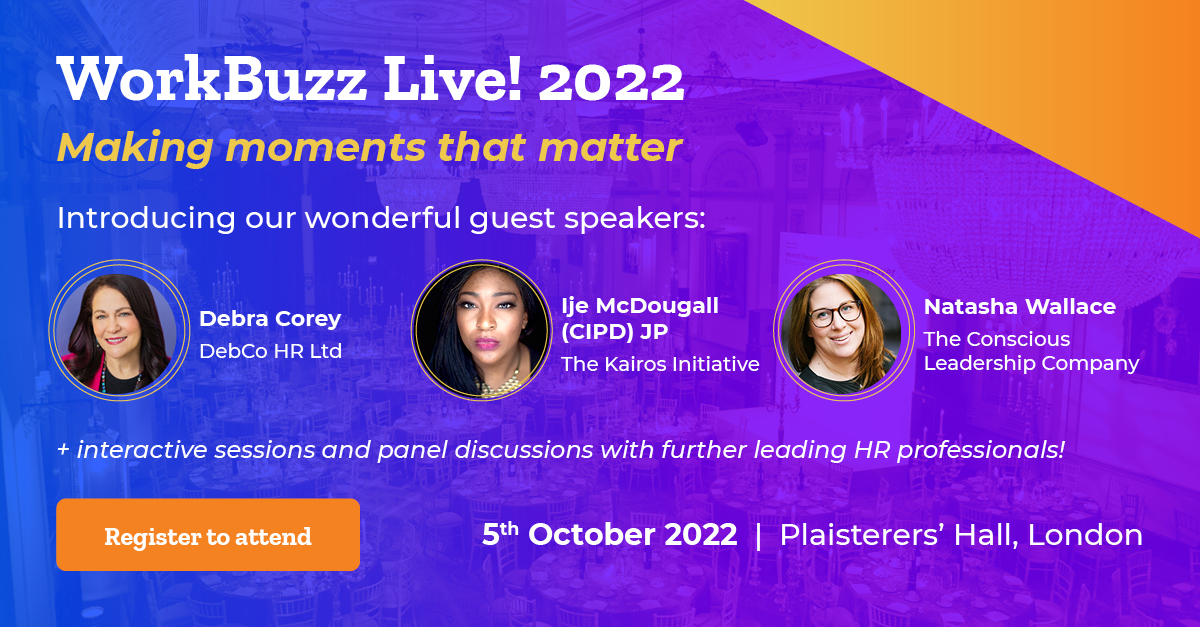
Social media image for event promotion
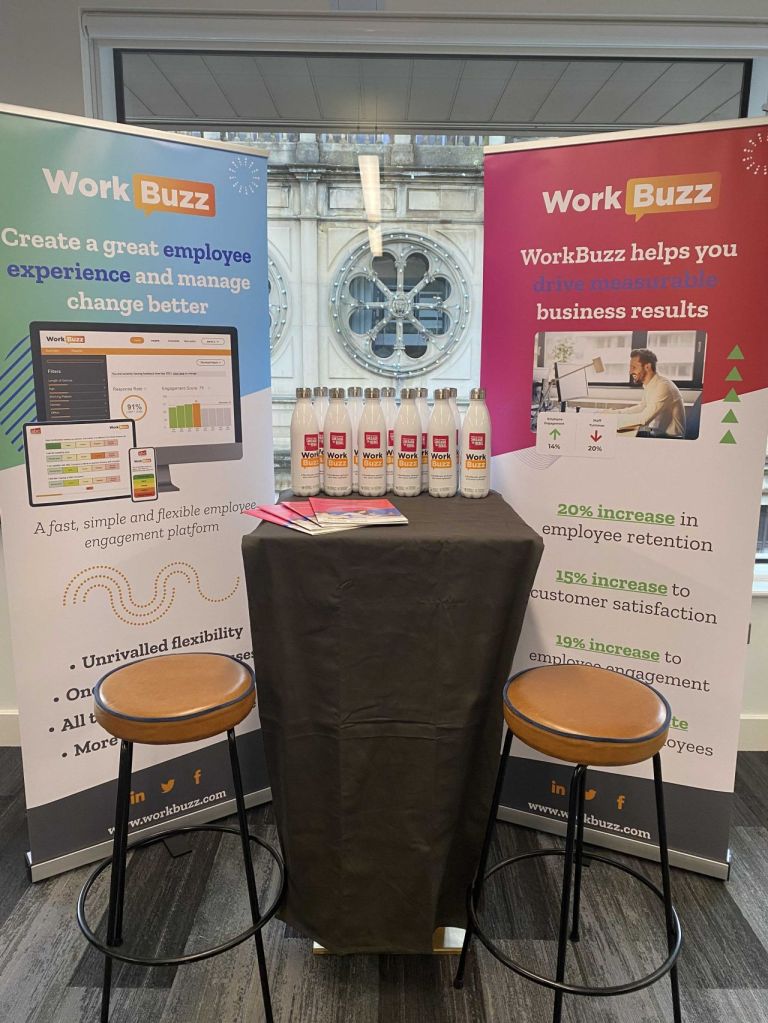
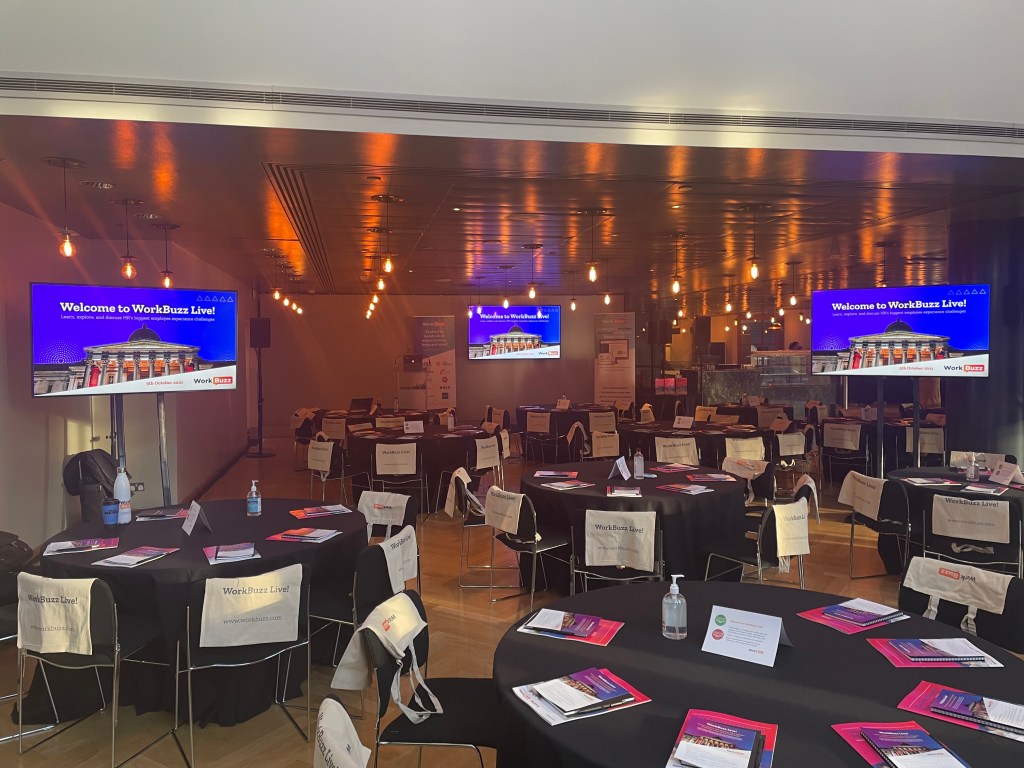
National Gallery, 2021
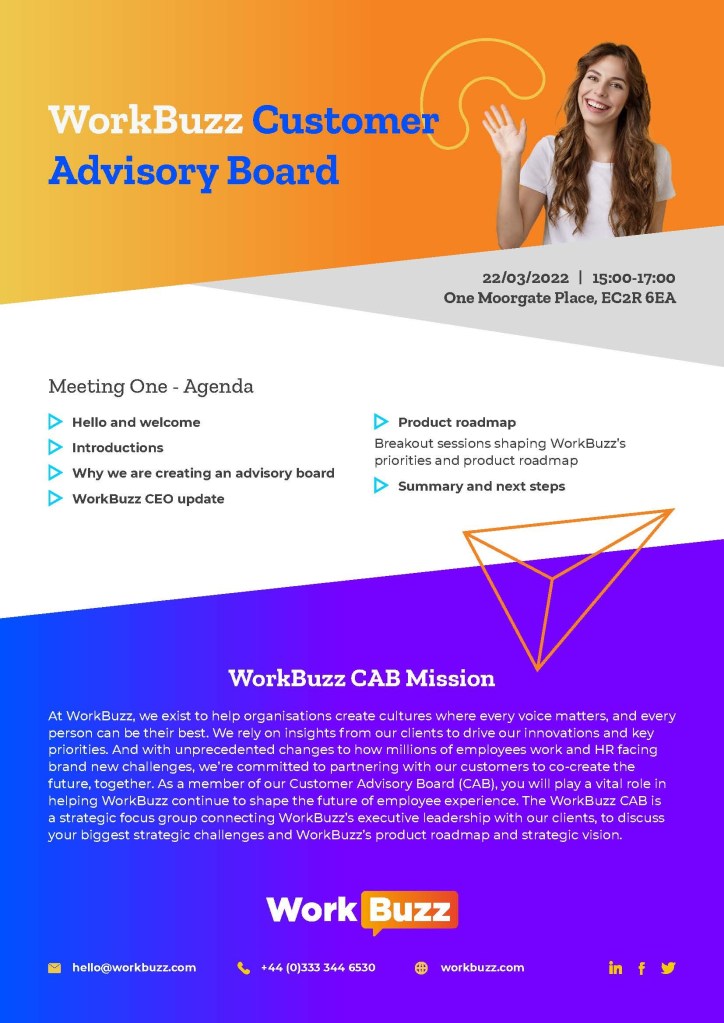
Customer Advisory Board meeting agenda
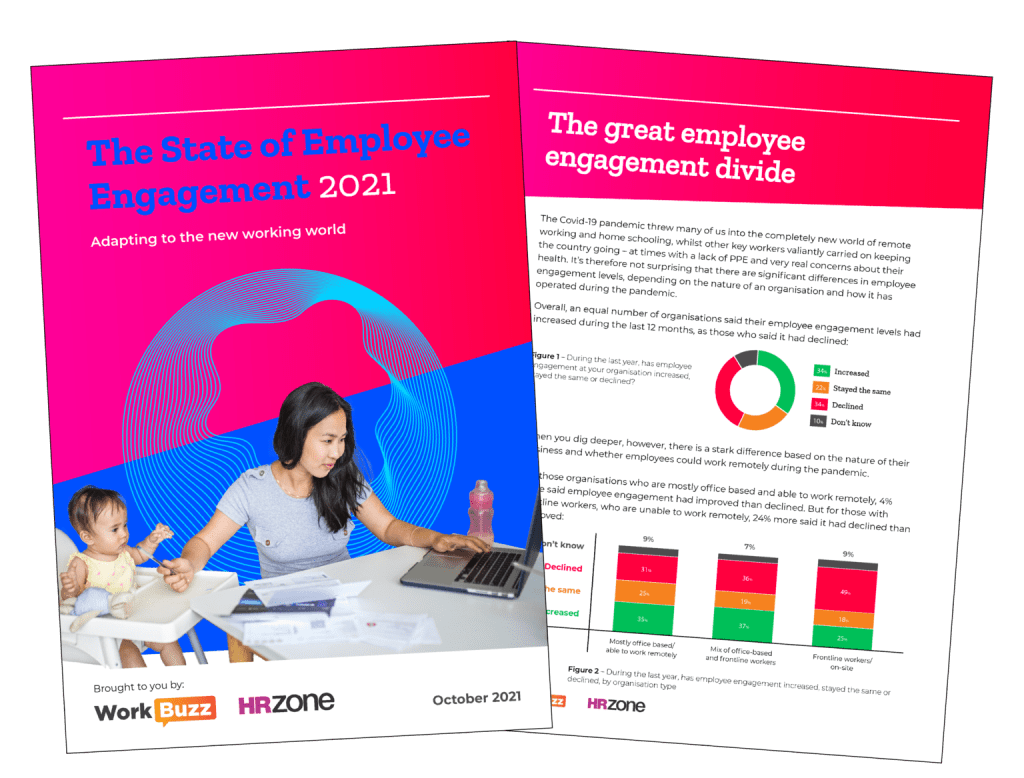

Webinar promotion


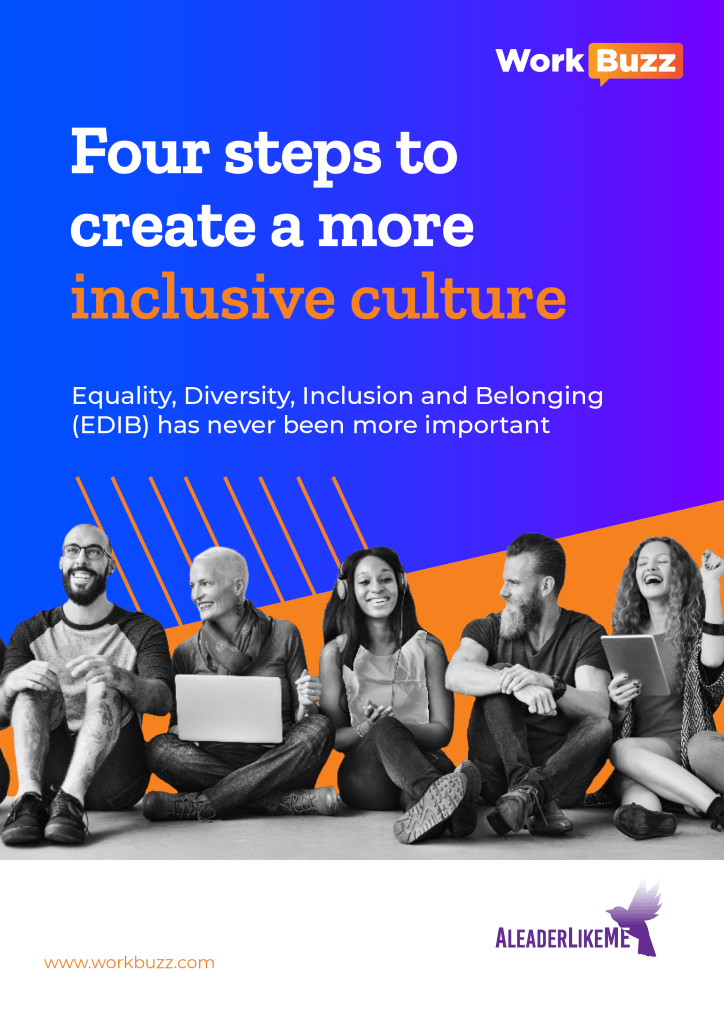
Article promotion – social media image

 My work portfolio